

Plot
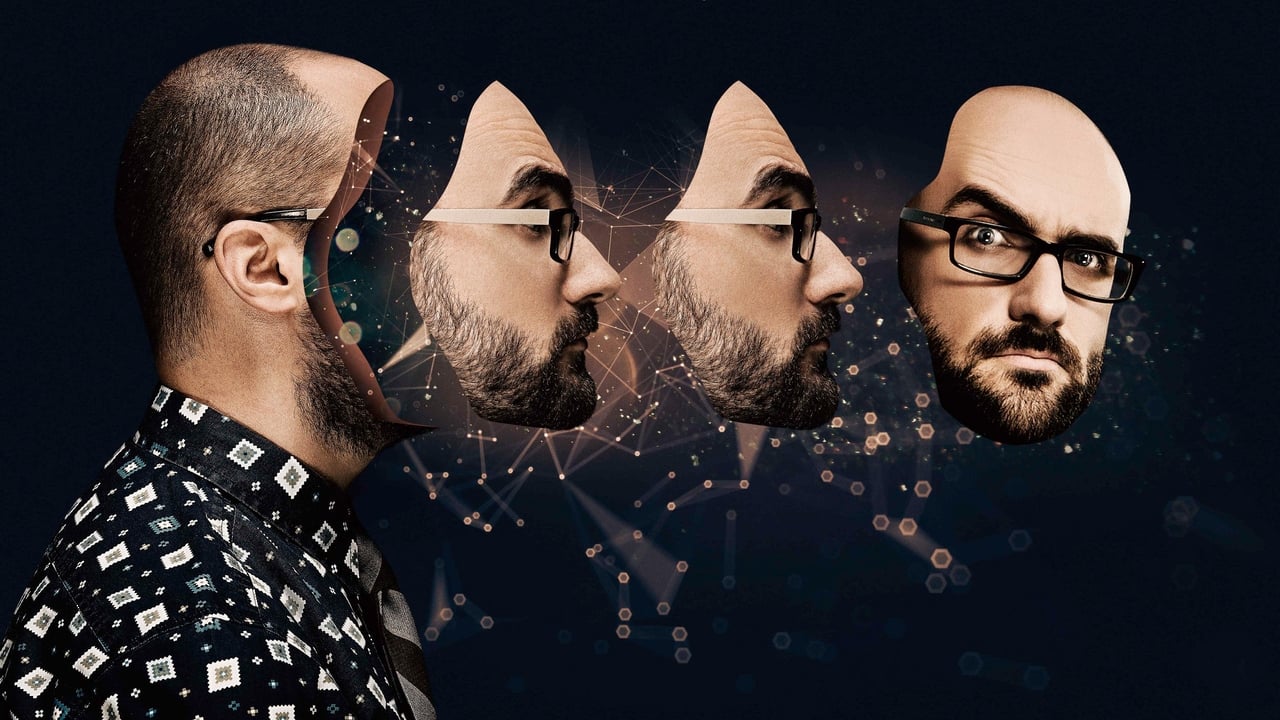
Explore the surprising things we know (and don’t know) about why people are the way they are through expert interviews, rare footage from historical experiments, and brand-new, ground-breaking demonstrations of human nature at work.

UK, Singapore, Malaysia, Japan, Australia: not available to stream yet
Streaming data by JustWatch via TMDB. Catalogs change, so check the service before you subscribe.
Explore the surprising things we know (and don’t know) about why people are the way they are through expert interviews, rare footage from historical experiments, and brand-new, ground-breaking demonstrations of human nature at work.

Official Trailer · Watch on YouTube
In airing order. Open a season to see every episode.

In Mind Field, host Michael Stevens brings his passion for science to his most ambitious subject yet: something we still know very little about, human behavior. Using real subjects (including guest stars and Michael himself) Mind Field reveals some of the most mind-blowing, significant, and least-understood aspects of the human psyche.

What happens when your brain is deprived of stimulation? What effect does being cut off from interaction with the outside world have on a person? What effect does it have on Michael, when he is locked in a windowless, soundproof isolation chamber for three days?

We are all unique individuals. We follow the beat of our own drum. We wouldn’t throw our own beliefs out the window just to fit in...or would we? In this episode of Mind Field, I demonstrate the strong, human urge to conform, and just how far people will go to fall in with the crowd.

We humans love to build, create, and organize. So why do we also love to destroy things? Can violently breaking stuff really help to calm us down, or does it just make us more angry? In this episode of Mind Field, I take a hard look at our urge to destroy.

So you say you love your computer or smartphone...but can it love you back? As we become more dependent on technology, and our technology becomes more lifelike, where does the line between human and computer lie? And what happens when our relationships become romantic?

We may value having Freedom of Choice, but are we actually happier when we have limited choices...or even no choice at all? Do we truly have control over our decisions, or are they really predetermined by other forces?

How much of the sensations we feel is determined by our physical bodies? Maybe our minds play a bigger role than we know. I’ll see if people can be tricked into feeling intense physical pain, even though it’s all in their heads.
How much do we communicate through facial expressions? Are our expressions affected by our moods, or is it the other way around? And what happens to your ability to relate to others when your facial muscles are frozen by Botox? In this episode of Mind Field, I take a look at what’s In Your Face.

What makes you, you? If even the most basic parts of you, like your memories or your past, can be forgotten or manipulated, how can you know ever really know who “you” are? In this episode of Mind Field I look at how well Do You Know Yourself?

Creator/host Michael Stevens takes us on an even deeper dive into the mysterious depths of the human psyche. Working with top Universities and cutting-edge Research Labs, Michael travels the world to explore the latest frontiers in psychology and neuroscience through groundbreaking demonstrations that test the powers and limits of the human mind.

Would you reroute a train to run over one person to prevent it from running over five others? In the classic “Trolley Problem” survey, most people say they would. But I wanted to test what people would actually do in a real-life situation.

Do psychedelic drugs really bring about self-healing and personal enlightenment? New research says they may. In this episode, I travel to the Amazonian jungle of Peru to experience the mind-expanding effects of the psychedelic brew Ayahuasca.

Psychology. Neuroscience. Drugs. All can be tools of interrogation.

Technology isn’t just changing our lives. It’s literally changing our brains -- and maybe for the better. In this episode, I’m a human lab rat in a groundbreaking study at UC Irvine, where scientists test how playing 3D video games affects my spatial memory.

What makes a hero? Dr. Philip Zimbardo, the psychologist behind the infamous Stanford Prison Experiment, now runs seminars to teach everyday people how to be heroes. But can heroism be learned? I put his unsuspecting students into a fake crisis situation to see if they would act heroically.

Exactly how do placebos work? Researchers believe that, through the power of suggestion, placebos may unleash the power of our own subconscious minds to cure ourselves. I was honored to participate in McGill University’s groundbreaking study of an accessory-assisted placebo.

Scientists can’t dissect living people’s brains to study their function. But by examining the behavior of people whose brains are atypical (due to stroke, injury, or being born that way), we can learn a lot about all our brains.

Our nervous system is fundamentally electric. We move our arm by sending a signal to the muscles that control it. That means we can bypass our brains and use electricity to control our bodies, or use our minds to control other bodies.
In the third season of Mind Field, creator/host Michael Stevens continues his never-ending quest to uncover the inner workings of the human mind. With unprecedented access to leading universities and researchers who are turning science fiction into science fact, Michael travels farther than he ever has before, designing demonstrations which put theories to the test in the real world.

Humans are the only Earthlings with complex language. But at what cost was that ability acquired? In this episode, Michael Stevens visit Tetsuro Matsuzawa to learn about his influential cognitive tradeoff hypothesis.

How are our moral decisions influenced by factors we’re not aware of? A phenomenon known as Moral Licensing claims that when we do something good, we often subconsciously allow ourselves to then do something bad.

There are 100 billion individual neurons in the human brain. Working together, they allow us to make sense of, and move through, the world around us. Scientists have built replicas of the human brain with computers, but no one has ever successfully made a brain out of humans.

Normal people can become monsters, given the right situation. That’s the standard narrative of the Stanford Prison Experiment, one of the most famous psychological experiments of all time. But what if the cause of its participants’ cruel behavior wasn’t what we’ve always been told?

If I could live forever, should I? How does being reminded of our own mortality affect us psychologically? In this episode I speak with mortician and death positivity activist Caitlin Doughty and visit a cryonics facility trying to extend human life indefinitely.

Are we alone in the universe? Even if we could contact aliens, what would we say? How would we say it? And, most importantly, should we even be trying to make contact at all? This episode takes me on a journey to compose and send my own personal message into outer space.

How can a lie become true? In this episode, Dr. Aaron Blaisdell and I create a game show that is actually a giant "human Skinner Box" to observe the formation of superstitious beliefs. And Dr.

In this episode I visit a researcher who is studying memory by using machine learning and neuroimaging to detect and predict people's brain states. I also travel to Japan to meet with a team working on ways to record the content of peoples’ dreams.
Created by: Michael Stevens
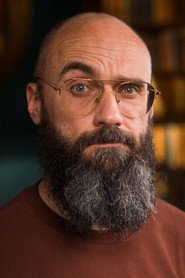 Michael StevensSelf - Host
 Ron MosslerSelf
 Philip ZimbardoSelf
 Jake RoperSelf
 Keller WorthamSelf
 Cathy StevensSelf
 Tetsuro MatsuzawaSelf
3 stills and 4 posters. Tap to enlarge; stills can be downloaded in full size.


YouTube Premium with a subscription.
Canada: YouTube Premium with a subscription; New Zealand: YouTube Premium with a subscription.
3 seasons and 24 episodes so far (as of Nov 15, 2026).
No. TMDB lists the show as canceled after 3 seasons.
About 30 minutes.
 History 1012020
 Explained2018
 The Mind, Explained2019
 Brawn: The Impossible Formula 1 Story2023
 Arnold2023
 American Manhunt: Osama bin Laden2025
 Rosanna Pansino
