Plot

PBS' premier science series helps viewers of all ages explore the science behind the headlines. Along the way, NOVA demystifies science and technology, and highlights the people involved in scientific pursuits.
Also known as: PBS Nova


Singapore, Malaysia, Japan: not available to stream yet
Streaming data by JustWatch via TMDB. Catalogs change, so check the service before you subscribe.
PBS' premier science series helps viewers of all ages explore the science behind the headlines. Along the way, NOVA demystifies science and technology, and highlights the people involved in scientific pursuits.
In airing order. Open a season to see every episode.


Since it explored Pluto in 2015, the New Horizons spacecraft has been zooming toward NASA’s most distant target yet. Join the mission team as the probe attempts to fly by Ultima Thule, an object 4 billion miles from Earth.

Einstein called it “spooky action at a distance,” but today quantum entanglement is poised to revolutionize technology from computers to cryptography.

Journey to Hawaii's Kilauea volcano, which sent rivers of lava through communities and into the sea when it erupted in 2018. A group of scientists and locals investigate the spike in volcano activity that turned paradise into an inferno.

New archeological evidence sheds light on the stunning engineering of the Great Pyramid of Giza.

With new technologies, NASA and private companies are promising a new renaissance in space travel.

In the shadow of Vesuvius and Pompeii, a lesser-known volcano puts the city of Naples at risk.

Scientists, engineers and political leaders devise a plan to save the Dead Sea, whose levels have declined by more than 65 feet since 1976.

Scientists try to determine the cause for the increasing megafire threat by exploring the physics of fire, how firestorms move and travel and by analyzing aerial drone and satellite data to catch fires before they start.

Canadian anthropologist Niobe Thompson travels to sites in Kazakhstan, genetics labs in Denmark and anthropology museums in Russia to unlock mysteries surrounding the first riders of wild horses.

Forensic archaeologist Cat Jarman and her team investigate the Great Heathen army, a legendary Viking fighting force that invaded England in the 9th century.

On the 50th anniversary of the historic Apollo 11 Moon landing, NOVA looks ahead to the hoped-for dawn of a new age in lunar exploration. This time, governments and private industry are working together to reach our nearest celestial neighbour. But why go back?

The rocky planets Mercury, Venus, Earth and Mars all have similar origins, but only one supports life.

The dry, red planet Mars was once a blue water world studded with active volcanoes and may have even had the ingredients to support life.

Jupiter's gravitational force made it a wrecking ball as it barreled through the early solar system, but it also helped shape life on Earth as it brought comets laden with water and possibly the asteroid that put an end to the dinosaurs.

Nasa's Cassini reveals the mysteries of Saturn's rings and new hope for life on one of its moons.

Uranus and Neptune's unexpected rings, supersonic winds and dozens of moons; an up-close view of Pluto before exploring the Kuiper belt.

Join experts as they compare what happened in several deadly bridge collapses across America.

Self-driving cars may one day be big business, but will they ever be safer than human drivers?

Sixty-six million years ago, an asteroid wiped out the dinosaurs in a fiery global catastrophe. An amazing trove of fossils reveals how mammals took over, ultimately evolving into the huge array of species—including humans—that rule the Earth today.

Since the Dead Sea Scrolls were discovered in 1947, these fragile parchment relics have intrigued scholars, religious leaders, and profiteers alike. The 2,000-year-old scrolls include the oldest-known versions of the Hebrew Bible and hold vital clues about the birth of Christianity.

How Leonardo da Vinci used science to create his legendary artwork. Included: why Mona Lisa's smile is so captivating—and what it took to create it.

Is violence actually declining? If so, why? And can we build a more peaceful future?

Camera technology is revolutionizing the study of animals—without them even noticing.


Following a trail of fossils found in all the wrong places–beech trees in Antarctica, redwoods and hippo-like mammals in the Arctic–NOVA uncovers the bizarre history of the poles, from miles-thick ice sheets to warm polar forests teeming with life.

Dogs have long been dependable companions by our sides. But it wasn’t always that way, and a look at their closest living relative, the wolf, makes it clear why. Research into dog domestication and intelligence offers clues into the human-dog relationship.

Worshipped as a goddess, condemned as satanic, and spun into a stunning array of breeds, cats have long fascinated humans. But did we ever really domesticate them? And what can science tell us about our most mysterious companions?

From fruit flies to whales, virtually every animal sleeps. But why? Why do we need to spend nearly a third of our lives in such a defenseless state?

When the U.S. trade embargo left Cuba isolated from medical resources, Cuban scientists were forced to get creative. Now they’ve developed lung cancer vaccines that show so much promise, some Americans are defying the embargo and traveling to Cuba for treatment.

The mysteries of fat and its role in hormone production, hunger and pregnancy.

The coronavirus SARS-CoV-2 has upended life as we know it in a matter of months. But at the same time, an unprecedented global effort to understand and contain the virus—and find a treatment for the disease it causes—is underway.

Eagles dominate the skies. But what makes these predators so special? Researchers study one special bird—and stunning up-close footage reveals her exceptional strength, eyesight, and flying skills.

With an extraordinary new technology called CRISPR, we can now edit DNA—including human DNA. But how far should we go? Gene-editing promises to eliminate certain genetic disorders like sickle cell disease. But the applications quickly raise ethical questions.

Scientists investigate the bizarre “intelligence” of slime molds, which appear to learn and make decisions—without a brain. These cunning, single-celled blobs can navigate mazes and create efficient networks. Can they also redefine cognition?

Writing shaped our world and the rise of human knowledge, from the trading of goods to tales of ancient goddesses and kings. Follow the evolution of the written word, from 4,000-year-old carvings in an Egyptian turquoise mine to modern-day alphabets.

Just as writing changed the course of human history, the evolution of paper and printing revolutionized the spread of information. The printing press kicked off the Industrial Revolution that fast-tracked us to the current digital age.

For animals in Mozambique’s Gorongosa National Park, the normal balance of competition and predation was upended when a war wiped out the top predators.

In October 2020, a NASA spacecraft called OSIRIS-REx attempts to reach out and grab a piece of an asteroid named Bennu to bring it back to Earth.

As global temperatures continue to rise, scientists are wondering if we need solutions beyond reducing emissions. Enter geoengineering. From sucking carbon straight out of the air to physically blocking out sunlight, the options may seem far-fetched.

When the roof of Notre Dame Cathedral erupted in flames in April of 2019, firefighters battled for nine grueling hours to save the historic landmark. Still, Paris came alarmingly close to losing more than 800 years of history.


The value of DNA testing and the risks of entrusting this private data to commercial enterprises and online databases.

Just about every solid, liquid, or gas in the world as we know it begins with reactions between individual atoms and molecules.

Women make up less than a quarter of STEM professionals in the United States, and numbers are even lower for women of color. But a growing group of researchers is exposing longstanding discrimination and making science more inclusive.

Without the chemistry of photosynthesis, ozone, and a molecule called Rubisco, none of us would be here. So how did we get so lucky? To find out, host David Pogue investigates the surprising molecules that allowed life on Earth to begin, and ultimately thrive.

NASA launches its most ambitious hunt for traces of life on Mars, landing a car-sized rover in a rocky, ancient river delta. The rover will stow samples for possible return to Earth and test technology that may pave the way for human travel to Mars.

Women make up less than a quarter of STEM professionals in the United States, and numbers are even lower for women of color. But a growing group of researchers is exposing longstanding discrimination and making science more inclusive.

Coral reefs are not just beautiful, they are also home to over a quarter of all marine life and are crucial to human societies around the globe. But as the climate changes and oceanic heat waves become commonplace, corals are bleaching and reefs are dying off.

What causes infertility, and how can assisted reproductive technologies help? Follow the journeys of people navigating fertility challenges from structural inequalities and racism to falling sperm counts, egg freezing, and IVF.

80 years after the world’s largest airship ignited in a giant fireball, newly discovered footage sparks a reinvestigation of what exactly caused the Hindenburg disaster.

Can new emission-free electric planes replace our polluting airliners and revolutionize personal transportation in our cities?

Five centuries ago, the Age of Exploration and Europe’s imperial colonization of far-off lands was launched by a revolution in ship design that made long-distance ocean voyages practical. But exactly how this momentous innovation happened eludes historians.

Bats have been implicated in deadly epidemics such as COVID-19 and Ebola, yet scientists are discovering evidence that they may hold a key to a longer and healthier life. From caves in Thailand and Texas to labs around the globe, NOVA meets the scientists who are decoding the superpowers of the bat.

As state-legalized cannabis spreads, NOVA investigates the latest scientific evidence for its potential benefits and risks, and how criminalization has disproportionately harmed communities of color.

Outnumbering atoms a billion to one, neutrinos are the universe’s most common yet most elusive and baffling particle. NOVA joins an international team of neutrino hunters as they try to capture an elusive fourth form of neutrino.

Join scientists on the most ambitious Arctic research expedition of all time. Experts from over twenty different nations join the voyage of the massive Polarstern icebreaker as it’s gripped by the polar ice and drifts for nearly an entire year.

From crunchy crickets to nutty fly grubs, NOVA takes a tasty look at insect foods and how they could benefit our health and our warming planet.

The sun is our life-giving source of light, heat, and energy, and new discoveries are unraveling its epic history. Join NOVA on a spectacular voyage to discover the sun’s place in a grand cycle of birth, death and renewal that makes this the age of stars.

Straddling the night sky, the Milky Way reminds us of our place in the galaxy we call home. But what shaped this giant spiral of stars and what will be its destiny?

It’s an age-old question: are we alone? Or do other lifeforms and intelligences thrive on worlds far beyond our own? Ultra-sensitive telescopes and dogged detective work are transforming alien planet-hunting from science fiction into hard fact.

Take a seat on the ultimate thrill ride to explore nature’s strangest and most powerful objects. Black holes can reshape entire galaxies, warp the fabric of space and time, and may even be the key to unlocking the ultimate nature of reality.

The Big Bang is when many think the universe started and time itself began. But what clues can we discover about this ultimate genesis of everything? And can we ever know what existed before the Universe’s birthday?

Gleaming symbols of prestige, skyscrapers are an ingenious way to save space in dense urban areas. But even as we devise ways to defend them against fires, wind, and earthquakes, can we also make them more livable, interactive, and eco-friendly?

The hidden scientific secrets of butterflies reveal them to be more inventive and resilient than we ever imagined. Follow their extraordinary life cycle and migrations to tropical rainforests, windswept prairies, and even inside a chrysalis as it’s being spun.

A team of intrepid paleontologists discovers that dinosaurs thrived in the unlikeliest of places—the cold and dark of winter in the Arctic Circle. How did they survive year-round and raise their young in frigid and dark winter conditions?

The ancient ancestors of today’s Maya people thrived in large sophisticated cities across Central America for centuries. Why, around 750 CE, did they begin to abandon many of their major cities?


In the Arctic, enormous releases of methane, a potent greenhouse gas, threaten the climate.

Scott Burnett is “Scatman”—an Australian ecologist on the trail of the secrets of poop. By identifying and analyzing animal scat for DNA and hormones, he discovers essential details of their behavior, how they fit in the ecosystem, and even how to protect them.

Sir David Attenborough investigates a unique site in southern England where amateur fossil hunters uncovered giant mammoth bones and evidence of Neanderthals.

Follow the dramatic personal journey of Hugh Herr, a biophysicist working to create brain-controlled robotic limbs. At age 17, Herr’s legs were amputated after a climbing accident.

Follow three women at risk of developing Alzheimer’s as they join a groundbreaking study to try to prevent the disease – sharing their ups and downs, anxiously watching for symptoms, and hoping they can make a difference.

In the Badlands of North Dakota, a team of scientists think they might have found the fossilized remains of animals killed on the day an asteroid struck Earth 66 million years ago.

In the second episode of this two-part series, the search continues for signs of what happened on the day the dinosaurs died. Scientists uncover extremely rare fossils and more evidence that could link the dig site in North Dakota to the asteroid that wiped out the dinosaurs 66 million years ago.

When the bow of the colossal Ever Given container ship plowed into the bank of the Suez Canal on March 23, 2021, international supply chains ground to a halt. What went wrong? Follow the dramatic efforts to free the ship and the investigation into one of the most expensive shipping disasters ever.

Thousands of ancient footprints stretch for miles across New Mexico’s White Sands National Park, capturing moments when Ice Age humans encountered now-extinct beasts, including mammoths and enormous ground sloths.

How did NASA engineers build and launch the most ambitious telescope of all time? Follow the dramatic story of the James Webb Space Telescope—the most complex machine ever launched into space.

Rising seas and sinking land threaten to destroy Venice. Can the city’s new hi-tech flood barrier save it? Discover the innovative projects and feats of engineering designed to stop this historic city from being lost to future generations.

Almost 40 years after the discovery of HIV, could we be on the verge of ending the AIDS epidemic in America? How did scientists tackle one of the most elusive deadly viruses to ever infect humans? Can innovative drugs bring new infections to zero?

In police departments and courts across the country, artificial intelligence is being used to help decide who is policed, who gets bail, how offenders should be sentenced, and who gets parole. But is it actually making our law enforcement and court systems fairer and more just?

Hallucinogenic drugs—popularly called psychedelics—have been used by human societies for thousands of years.

Lionfish–long prized in home aquariums–have invaded the Atlantic, and are now one of the ocean’s most successful invasive species, wreaking havoc in waters across the globe.

One of the world’s greatest ancient enigmas, the Nazca lines are a dense network of criss-crossing lines, geometric shapes, and animal figures etched across 200 square miles of Peruvian desert. Who created them and why?

From Bitcoin to NFTs, crypto is making headlines. But what exactly is it, and how does it work? Experts go beyond the hype and skepticism to unravel the social and technological underpinnings of crypto – exploring how it came to be and why this new technology may change more than just money.

Discover how the concepts of zero and infinity revolutionized mathematics.

In April 2019, the world watched as a devastating fire almost destroyed Paris’s iconic Notre Dame Cathedral. Go behind the scenes with a team of engineers, masons, and timber workers tackling the daunting challenges of restoring the historic landmark.


Thousands of engineers, technicians and workers race to build Europe’s biggest construction project–London’s new railroad, the Elizabeth Line.

A NASA spacecraft named Lucy blasts off from Cape Canaveral on a mission to the Trojans, a group of asteroids over 400 million miles from Earth thought to hold important clues about the origins of our solar system.

Recent discoveries in archaeology are exploding the myth of the Amazon as a primeval wilderness, revealing traces of ancient civilizations that flourished for centuries, with populations numbering in the millions.

Join scientists as they use NASA’s brand new James Webb Space Telescope to peer deep in time to hunt for the first stars and galaxies in our universe, and try to detect the fingerprints of life in the atmospheres of distant exoplanets.

It’s hard not to notice: our weather is changing. From longer, hotter heat waves, to more intense rainstorms, to megafires and multi-year droughts, the U.S. is experiencing the full range of impacts from a changing global climate.

The U.S. recently set an ambitious climate change goal: zero carbon emissions by 2050. And to achieve that, slash emissions in half by 2030. Is it possible? And what kind of technology would it take?

North Atlantic right whales are among the planet’s most critically endangered large ocean mammals. With fewer than 350 remaining as of 2023, they could be extinct within 20 years. But teams of marine biologists and whale rescuers are determined to help save the species.

In January 2022, one of the most powerful volcanic eruptions in recorded history rocked the Pacific islands of Tonga, sending shockwaves around the world.

Is what you see real? Join neuroscientist Heather Berlin on a quest to understand how your brain shapes your reality, and why you can’t always trust what you perceive.

Are you in control, or is your brain controlling you? Dive into the latest research on the subconscious with neuroscientist Heather Berlin. Sleepwalking, anesthesia, game theory, and more reveal surprising insights in this eye-opening journey to discover what’s really driving the decisions you make.

Today, Earth is enveloped by a thin veil of gas, a narrow band of atmosphere that protects a world covered in lush green vegetation, deep blue oceans, and abundant life.

700 million years ago, Earth was a giant snowball cloaked in ice from pole to pole—a global deep freeze that held the planet in a stranglehold, threatening the survival of the earliest complex life. How did life manage to hold on in this forbidding world?

For billions of years, life teemed in the oceans of planet Earth while the land was desolate and inhospitable. So how did life make the leap to land?

252 million years ago, the most devastating mass extinction of all time abruptly wiped out around 90% of all species on Earth. The culprits were the biggest volcanic eruptions the world has ever seen, emitting some 700 thousand cubic miles of magma and rock.

The story of Earth can only be told because now, 4.5 billion years into its existence, a technological and self-aware animal species roams its surface, able to study the very planet that gave rise to it. But how exactly did Earth give rise to humans?

In the span of just a few decades, China has transformed into a science and technology superpower. But how did it get here and where is it headed? Take an insider’s tour of high-profile tech companies and labs that are driving China’s meteoric rise to the forefront of global innovation.

Malaria is one of humanity’s oldest and most devastating plagues. In many parts of the world, it remains an ever-present scourge that sickens or kills millions of people each year. What if it could finally be defeated?

Many descendants of enslaved people have little record of their family's ancestry. Follow one family's quest to discover their lost history, and see how science and genealogy can help rebuild a family tree broken by slavery.


In Egypt’s Sahara Desert, massive skeletons with strange skulls and gigantic teeth jut out from the sandy ground.

How were the giant stone heads of Rapa Nui–also known as Easter Island–carved and raised, and why? Since Europeans arrived on this remote Pacific island over 300 years ago, controversy has swirled around the iconic ancient statues and the history of the people who created them.

Explore the revolutionary engineering behind Paris’s iconic landmark. Completed in just over two years for the 1889 World’s Fair, the iron tower smashed the record for the tallest structure on Earth, ushering in a new age of global construction that reached for the skies.

For decades, scientists have tried to unlock the secrets of ancient DNA. Follow the dramatic quest to recover DNA millions of years old and reveal a lost world from before the last Ice Age.

A.I. tools like ChatGPT seem to think, speak, and create like humans. But what are they really doing? From cancer cures to Terminator-style takeovers, leading experts explore what A.I. can – and can't – do today, and what lies ahead.

Explore the spectacular cosmic phenomenon of a total solar eclipse. In April 2024, the Moon's shadow is sweeping from Texas to Maine, as the U.S. witnesses its last total eclipse until 2044, and scientists scramble to unlock the secrets of our Sun.

Whether you’re on social media or surfing the web, you’re probably sharing more personal data than you realize. Find out where your data is going, who’s selling it, and how you – and a new kind of web – could put control back in your hands.

How big is the universe? Will it ever end? Why is so much of it made of mysterious dark matter and energy? See how mind-bending discoveries over the past 50 years have revolutionized our understanding of the universe.

Out in the solar system, the weather gets wacky – with globe-spanning dust storms, monsoons of liquid methane, and lightning 10 times stronger than here on Earth. Discover the forces driving the dramatic weather on neighboring planets and moons.

From a dwarf planet that looks like a deflated football, to a tiny moon with cliffs taller than Mt. Everest, to the spectacular rings of Saturn, discover how the effects of gravity produce the amazing variety of weird worlds in our solar system.

All around our solar system, volcanoes are powerful shapers of worlds. Next door on Mars is Olympus Mons, a giant volcanic mountain more than twice the size of Mt. Everest. And closer to the Sun, thousands of volcanoes produce the toxic atmosphere that keeps Venus boiling.

Ice might seem familiar to us on Earth, but out in the solar system, it can get quite exotic. From Uranus’s ultra hot superionic ice, to glaciers of nitrogen ice on Pluto, to carbon dioxide snow on Mars, ice is a fundamental building block throughout our cosmic neighborhood.

The classic view of our solar system contains eight orderly planets, some with moons in neat orbits – but when we look closer, we discover a bunch of stuff missing from this simple, clockwork model.

When we look at the world at the tiniest scales in the subatomic realm, things get weird – very weird.

Around the world, engineers are finding ingenious ways to amplify our abilities and senses – allowing us to access and shape the world way beyond our natural gifts.

From the time our species first evolved, we’ve been on the move. Not content to stay in one place, we’ve imagined and invented and built our way from one place to the next.

Thousands of years of human innovation have allowed us to shape the environment to improve lives. The consequences of our activities are not always benign – but there are solutions.

After the devastating 2019 fire at Notre Dame, two mysterious sarcophaguses were discovered under the cathedral’s stone floor. Who is buried in them, and what secrets will these coffins reveal?


Can science reveal the secrets of mysterious objects seen in our skies?

Follow the race to build a world-class airport on the site of one of America’s busiest flying hubs.

Fossils reveal how birds survived the killer asteroid and became today’s only living dinosaurs.

A long-lost ancient cemetery opens the door to a unique period in Egyptian history.

Archaeologists uncover new truths about Pompeii, a wealthy Roman playground with dark secrets.

Follow the investigation into the deadly container ship collision that closed the Port of Baltimore.

Explore key military technologies in the American colonies’ fight for freedom.

Follow scientists in a quest to understand how complex forest ecosystems can help cool our planet.

Black Americans are nearly twice as likely to suffer from chronic diseases than Whites. Why? From false beliefs that permeate modern medicine to life experiences that can damage human cells, uncover the underlying causes of racial health disparities.

What really happens in a multi-vehicle pileup? A first-of-its-kind experiment aims to stage a high speed crash to gain new insights on car safety. But how can they create and study a complex collision without putting any lives in danger?

Car safety experts just pulled off a first-of-its-kind remote controlled multi-vehicle pile up. Now investigators are put to the test as they analyze the data and look for insights into driver behavior and vehicle design.

Where did humans come from, and what makes us unique? Discover the remarkable origins of Homo sapiens, and the crucial moments of innovation, communication, and ritual that set us on our path.

Follow Homo Sapiens as they venture across the world, farther than any other human species. See how they invented new tools to thrive in challenging environments - and meet the mysterious hobbit-like humans they may have encountered along the way.

For 400,000 years, Neanderthals thrived across frigid, Ice Age Europe. What happened when Homo sapiens arrived, and how did these encounters change our species – including our DNA – in ways still with us today?

Follow ancient humans' perilous journey into the Americas, where a frigid Ice Age landscape, mammoths, and other fearsome beasts tested their resilience.

Discover how Homo sapiens transformed from nomads to empire builders. Witness the innovations – from animal domestication to writing – that revolutionized ancient life and shaped our modern world.

Archaeologists investigate dozens of strange Stone Age megastructures in the Arabian desert. They're so big that their true form is visible only from the air, yet these giant structures were built by a mysterious people 9000 years ago.

In September 2024, Hurricane Helene dumped 14 inches of rain on North Carolina, triggering flash floods and killing more than 100 people. Why are these floods on the rise around the world-even in places thousands of feet above sea level?

From ammonia leaks to Space Shuttle disasters to a spacewalk gone terribly wrong, astronauts and Mission Control insiders relive the most terrifying moments during construction of the International Space Station.

Witness life-or-death decisions 250 miles above Earth, as astronauts and Mission Control work together to survive moments of high danger on board humanity's remarkable orbiting laboratory, the International Space Station.


What if asteroids, long feared as destroyers of life, were key to our existence? Explore a revolutionary theory that these violent collisions provided the essential ingredients – water, minerals, and energy – needed to jumpstart life on Earth.

Deep in the Cambodian jungle lie the ruins of Angkor, a marvel of urban engineering and seat of the once-mighty Khmer Empire. New discoveries are revealing how this ancient metropolis was built – and what likely led to its devastating collapse.

Can dogs understand what we say—and talk back? Witness amazing moments from a major experiment, as thousands of dogs use speech buttons. Pet owners are convinced, but are our furry friends really communicating their thoughts and desires with us?

The surprising story of mammal evolution begins long before the age of dinosaurs. Witness how some of our prehistoric mammal relatives survived global catastrophes, defying extinction and evolving into the vast array of mammals we know today – including us.

Surprising evidence at the world's oldest temple overturns our understanding of human history. The latest excavations at the 12,000 year-old Göbekli Tepe in Turkey are making archaeologists rethink the roots of civilization.

A half-century after Apollo, the Artemis missions aim to bring astronauts back to the Moon and establish a lunar space station. Follow the Artemis II engineers and crew on the perilous 10-day journey to orbit the Moon.

An invisible force is causing chaos around the globe. Follow scientists racing to understand the catastrophic "rain bombs" that are sinking ships and downing planes. Can they learn to predict these devastating weather events and save lives?

Follow archaeological investigations into the dramatic origins of democracy in Greece 2,500 years ago. Mass graves and ancient ruins where tyrants were murdered shine new light on the birth of a revolutionary form of government.

Once a death sentence, cystic fibrosis now faces an apparent miracle cure. Follow the decades-long scientific quest, fueled by desperate parents, that led to this breakthrough with potential implications for the future of personalized medicine.
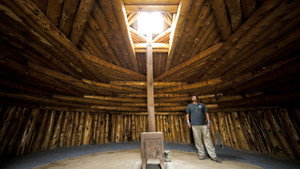
For millennia, Indigenous peoples in North America have practiced a unique form of science. From navigating the featureless Arctic to building energy-efficient homes in the desert, see how cultural traditions have led to remarkable innovations.
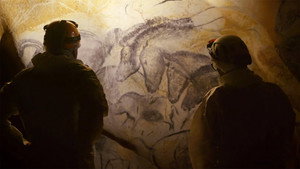
Hidden in the gorges of Southern France lies one of the most stunning decorated caves ever discovered: Chauvet, 'the Sistine Chapel of Paleolithic art.' For thousands of years, this geological wonder was visited only by animals.
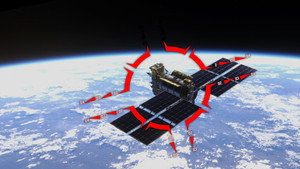
An arms race is escalating above us, as military powers vie for control of space. Discover how satellites we rely on are vulnerable to attack, how debris is filling increasingly crowded orbits, and what can be done to protect them.
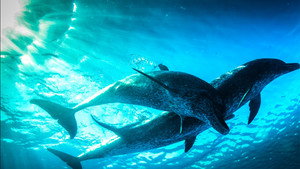
Brains might be the most complex structures on our planet – so how did evolution build them? To find out, rewind the clock three billion years to trace the evolutionary story of the dolphin, one of the smartest animals alive today.
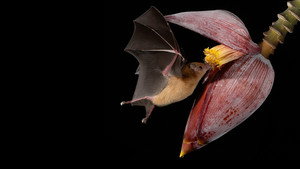
The relentless pursuit of energy, the very act of eating, has profoundly shaped life on Earth.
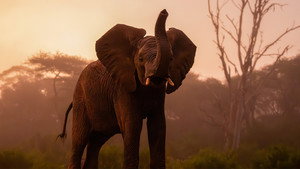
Earth teems with life in every imaginable form – creatures that walk, swim, slither, and fly. Some grow to astonishing size, like the elephant, while others boast extravagant adaptations, like the hummingbird’s long beak. How did evolution craft such a dazzling variety of body plans?
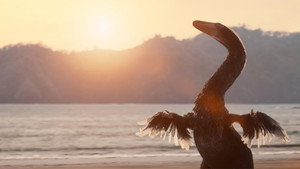
Sex changed everything – evolutionarily speaking, that is. By shuffling the genetic deck it unleashed variation, fueling diversity and throwing evolution into overdrive. But how did this radical innovation begin?

Run. Leap. Swim. Pounce. Slither. Fly. Life moves in countless ways – but it wasn’t always this way. When animals first emerged, they clung to the seafloor, until a single twitch sparked a revolution.
High on a mountaintop in northern Chile, a remarkable new eye on the sky is poised to transform our understanding of the universe.


The mission seemed impossible, the odds astronomical, but the results were spectacular. NOVA presents the fascinating story behind the Apollo space program, including the historic walk on the moon in 1969, in a two-hour special.
On August 21, a total solar eclipse crosses the continental U.S. for the first time in 99 years. Scientists and cutting-edge NASA missions investigate this once-in-a-life-time event: how and why they occur, and they reveal about the sun.
Follow the diabetes epidemic in the U.S. Diabetes and pre-diabetes affect over 100 million people in the country, costing more than $325 billion each year.

CRISPR gene-editing technology is advancing quickly. What can it do now and in the future?
Why does a widely used internet search engine deliver results that can be blatantly racist and sexist? Two leading information researchers investigate their discoveries of hidden biases in the search technology we rely on every day.

A filmmaker with a rare type of multiple sclerosis explores the mysterious causes of MS.

Discover the Gulf of Maine and how its bounty was forever changed by a global appetite for fish. Now with the Gulf warming faster than 97 percent of the world’s oceans, witness how wildlife and people are adapting to rapid change.

Dive into Cashes Ledge with scientists as they race to discover if this remote and relatively pristine part of the Gulf of Maine is vulnerable to rapid warming. Can Cashes still offer hope for the Gulf’s more than 3,000 species?

Now at a crossroads for the future of the Gulf of Maine and our oceans, Indigenous peoples and scholars practice climate resilience and adaptation, scientists track developments, and entrepreneurs find new ways to make a living from the sea.

Investigate medical algorithms in which the patient’s race drives decisions.
…
…
…
…
Directed by: Sarah Holt, Kirk Wolfinger, Liesl Clark, Doug Hamilton · Written by: Gary Glassman, Julia Cort, Sarah Holt, Liesl Clark
 Jay O. SandersSelf - Narrator (voice)
 Lance LewmanNarrator (voice)
 Neil RossNarrator
 Liev SchreiberNarrator (voice)
 Will LymanNarrator
 David PogueHost
 Stacy KeachNarrator (voice)
 David Ogden StiersNarrator
 Brian GreeneHost
 John Lithgow6 episodes
 Neil deGrasse Tyson6 episodes
 Peter Thomas5 episodes
 Richard Donat5 episodes
 Ella Al-Shamahi5 episodes
 Corey Johnson4 episodes
 Richard Smith4 episodes
 Jamie Effros4 episodes
 Kathryn Walker4 episodes
 Demetri Goritsas3 episodes
 Ted Marcoux3 episodes
 Eric Meyers3 episodes
 David Attenborough3 episodes
 Joe Morton3 episodes
 Roy Scheider3 episodes
 Kirk Johnson3 episodes
 Valerie Harper3 episodes
 Stockard Channing2 episodes
 Christian Pedersen2 episodes
 Oliver Platt2 episodes
 Ian Holm2 episodes
 Martin Jarvis2 episodes
13 stills (3 in 4K) and 12 posters. Tap to enlarge; stills can be downloaded in full size.




Prime Video, YouTube TV and PBS with a subscription; free on PBS and Hoopla; rent or buy on Amazon, Apple TV and more.
Canada: PBS Documentaries with a subscription; free on Hoopla; rent or buy on Apple TV; UK: PBS America with a subscription; rent or buy on Apple TV and Amazon; Australia: Free on Hoopla; rent or buy on Apple TV; New Zealand: Free on Hoopla.
53 seasons and 1030 episodes so far (as of Nov 16, 2026).
Season 53, episode 18 airs Dec 16, 2026.
About 55 minutes.
 Planet Earth2006
 Planet Earth II2016
 Our Planet2019
 Welcome to Earth2021
 Night on Earth2020
 Planet Earth III2023
 Life2009